Which hummingbirds live in Colorado?
Four hummingbirds are regulars in Colorado. Two of them, the Broad-tailed and the Black-chinned, spend the summer here and raise their young. The other two, the Rufous and the Calliope, pass through on migration, mostly in July and August. If you have a feeder in the mountains or foothills, the Broad-tailed is almost certainly the first one you'll meet. At lower elevations, especially along rivers and canyons, look for the Black-chinned.
The summer residents
Broad-tailed Hummingbird
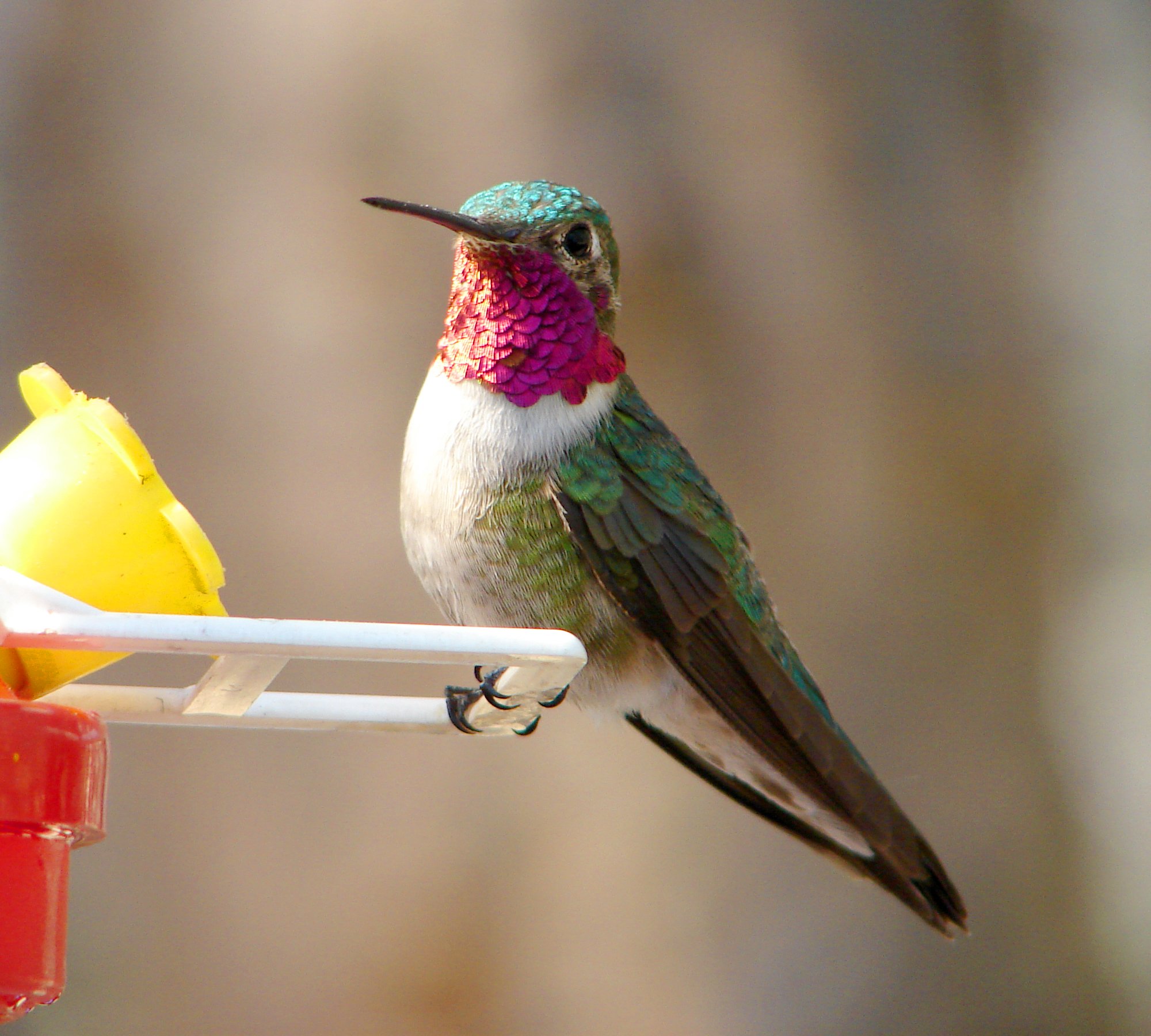
Male Broad-tailed Hummingbird. Photo: Michelle Lynn Reynolds, CC BY-SA 3.0, via Wikimedia Commons

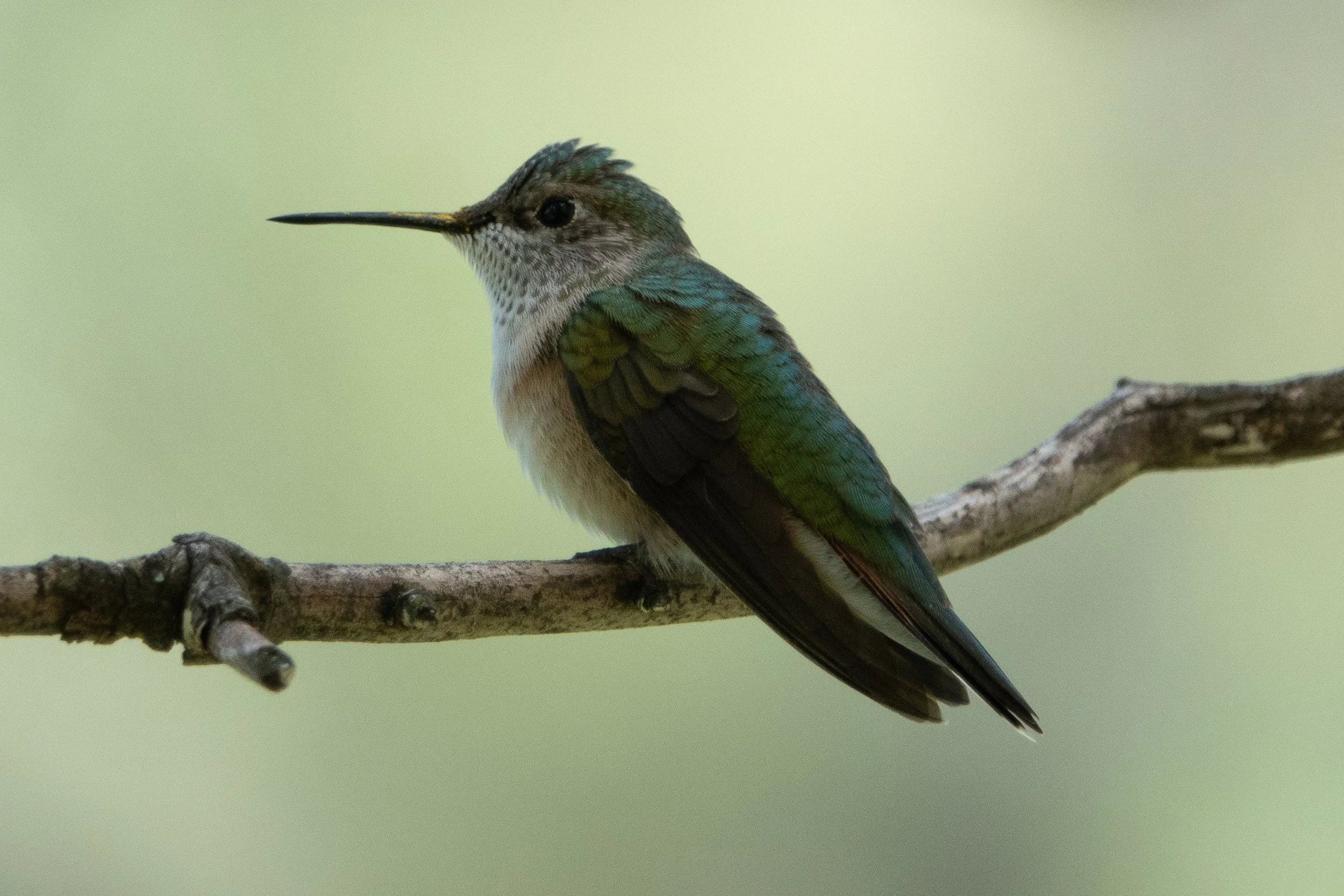
Female Broad-tailed Hummingbird. Photo: Bettina Arrigoni, CC BY 2.0, via Wikimedia Commons
_Greenhouse_Trail_Portal_AZ_2018-09-07_10-34-03_(44941717824).jpg)
Colorado's main breeding hummingbird, and the one most Coloradans know by sound before sight. The adult male has a rose-magenta throat, and when he flies his wingtips make a loud, metallic trill. That trill is made by his feathers, not his voice, and it gets quieter as the feathers wear through the season.
Where: mountain meadows and open woodland, mostly above about 6,000 feet. They breed from about 5,000 to 10,500 feet.
Size: 3.1 to 3.5 inches long, and about 2.8 to 4.5 grams.
Female: green above with buffy flanks, a green-spotted throat, a pale eye-ring and a touch of rust at the base of the tail.
Flowers: red columbine, Indian paintbrush, larkspur, scarlet gilia and currants. They also drink sap from wells drilled by sapsuckers.
Nesting: nests run from late April to late July. The female lays 2 white eggs, sits on them for 16 to 19 days, and the young leave the nest 21 to 26 days after hatching. The nest is spiderweb with lichen and moss on the outside.
Cold nights: on cold nights they can go into torpor, slowing their heart rate and letting their body temperature drop to save energy. It's how they get through chilly Colorado mornings.
Worth knowing: Broad-tailed numbers have dropped by about 45% since 1966, and the species is on the Yellow Watch List. A University of Colorado Boulder study near Crested Butte found that the birds still arrive on the same schedule, but early flowers like glacier lily now bloom about 17 days earlier than in the 1970s, so the birds are increasingly arriving after their first food source has peaked.
Black-chinned Hummingbird
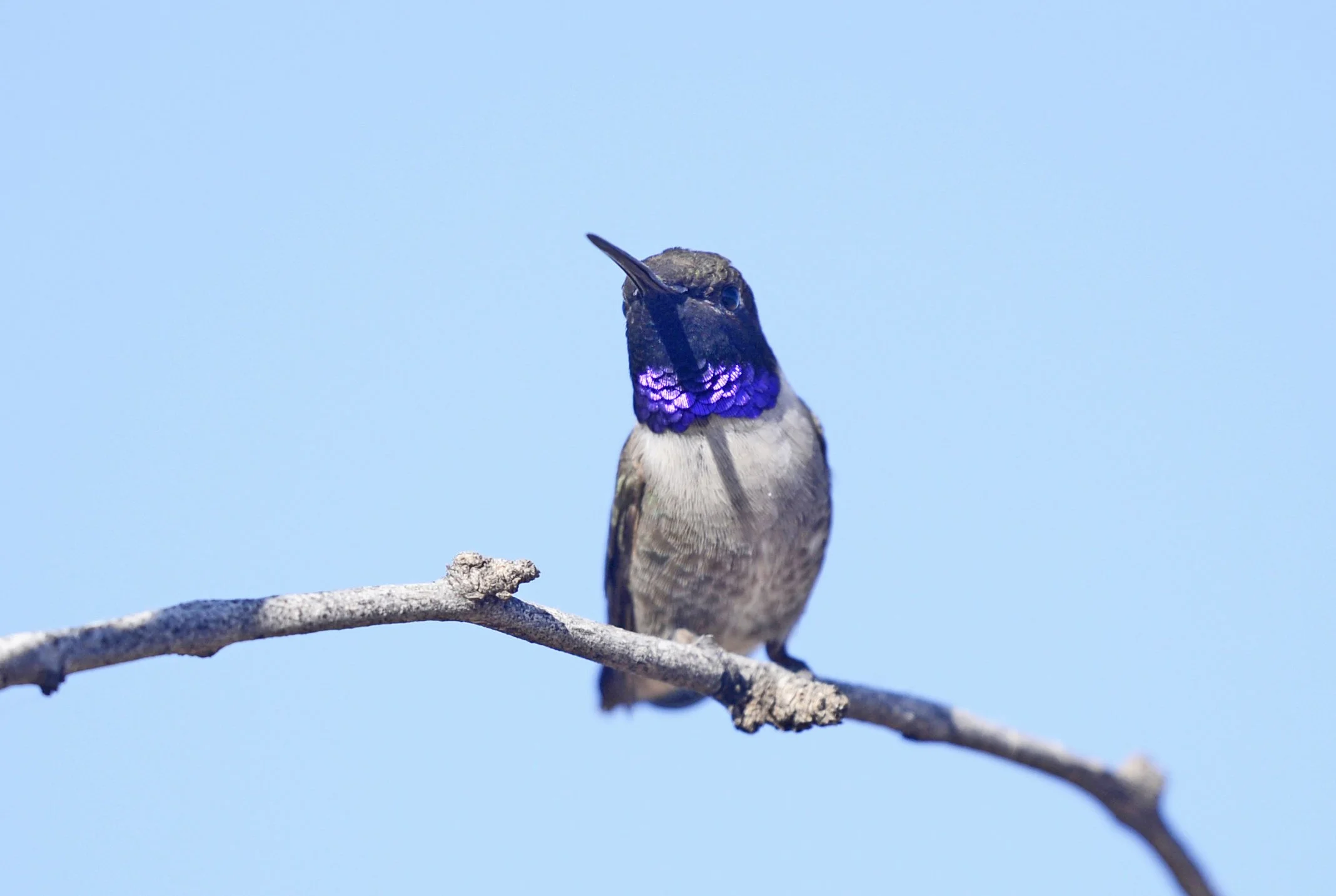
Male Black-chinned Hummingbird. Photo: Vickie J Anderson, http://www.wildlifeimagesupclose.com, CC BY-SA 4.0, via Wikimedia Commons

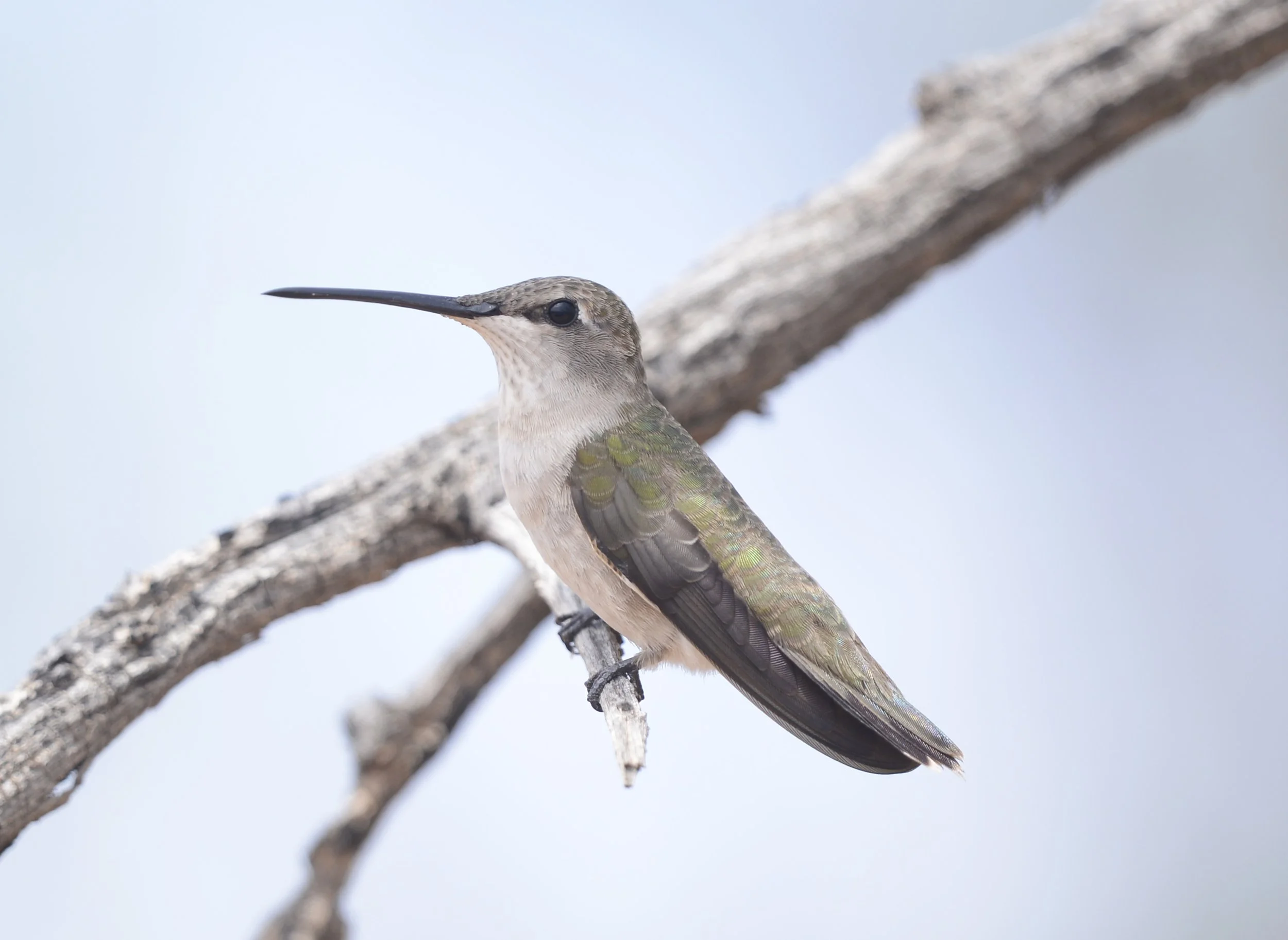
Female Black-chinned Hummingbird. Photo: VJAnderson, CC BY-SA 4.0, via Wikimedia Commons

The lower-elevation summer resident. The adult male's throat looks black in most light, with a thin purple band at the bottom that flashes when the light hits it. They like to perch at the very top of bare branches.
Where: mostly below about 6,000 feet, in canyons, along rivers, in cottonwoods, oak and scrub. They're more widespread on the Western Slope and in the southwest of the state and uncommon on the eastern plains. They adapt well and often live in towns.
When: they typically arrive in April.
Size: about 3.5 inches long, 2.3 to 4.9 grams.
Female: dull green above, grayish-white below, with white tips on the tail.
Nesting: nests average about 6 feet off the ground. Two eggs at a time, and they may raise 1 to 3 broods a year.
Status: low conservation concern.
The late-summer migrants
Rufous Hummingbird
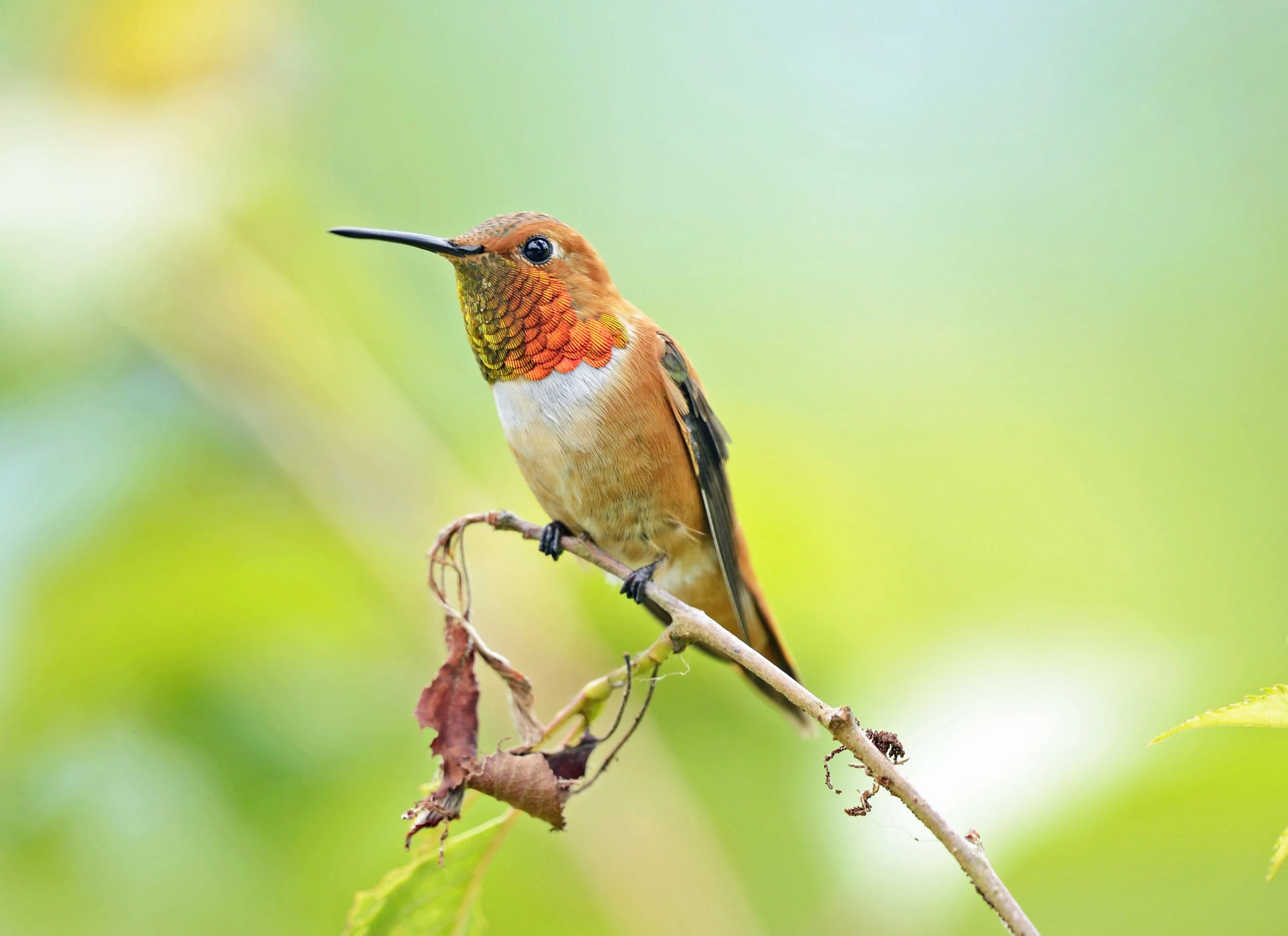
Male Rufous Hummingbird. Photo: VJAnderson, CC BY-SA 4.0, via Wikimedia Commons

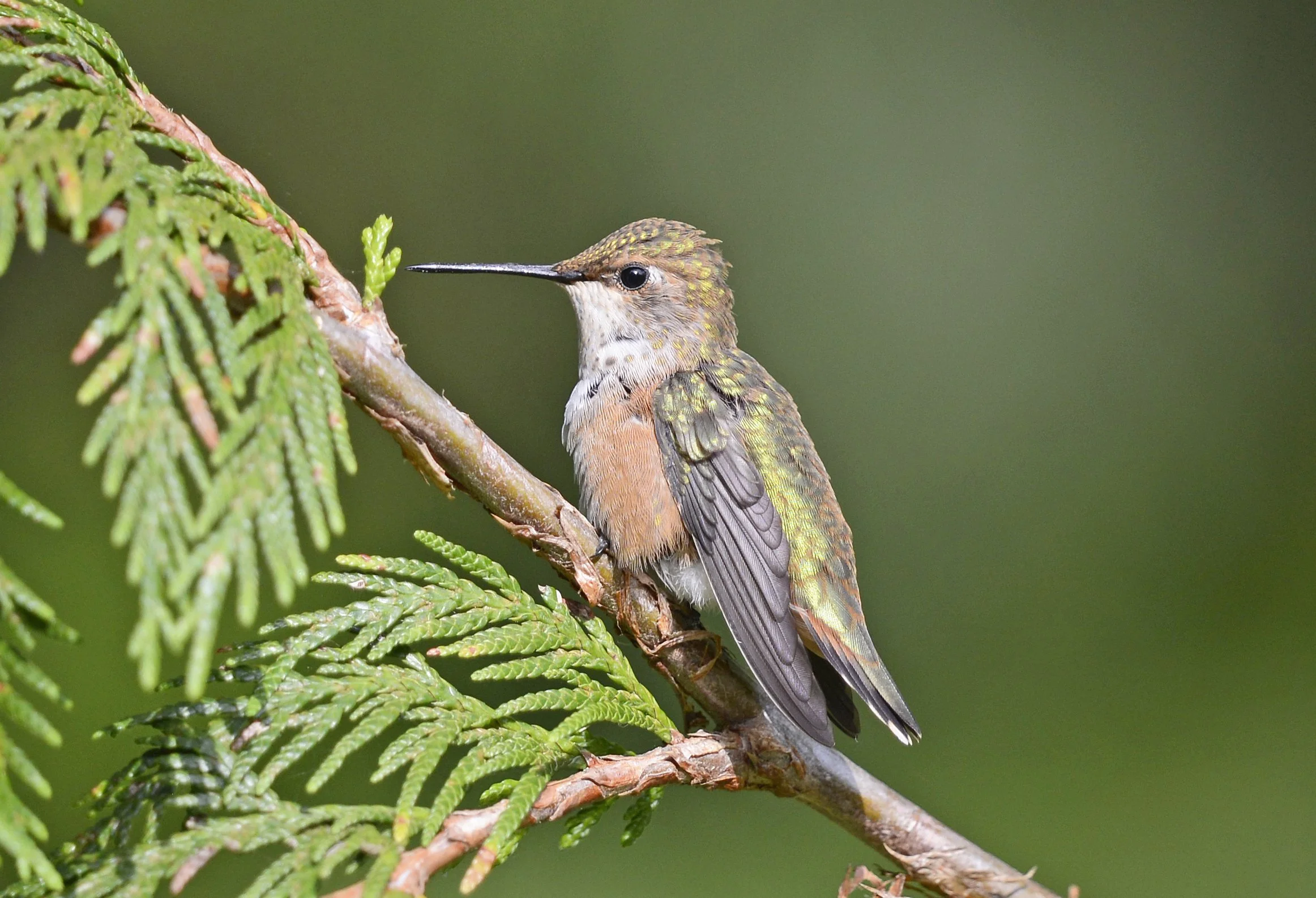
Female Rufous Hummingbird. Photo: VJAnderson, CC BY-SA 4.0, via Wikimedia Commons

The orange one, and the reason your feeder turns into a battlefield in late summer. Rufous hummingbirds fly a giant clockwise loop: north up the Pacific Coast in spring, then south through the Rocky Mountains in late summer and fall. Some breed as far north as Alaska, about 3,900 miles one way. They start heading south as early as July.
Male: iridescent red-orange throat with an orange back and belly.
Female: green above with rufous flanks, rufous in the tail, and often an orange spot on the throat.
Size: 2.8 to 3.5 inches, 2 to 5 grams.
Behavior: all ages and both sexes are aggressive, even on stopovers of only a week or two. They chase off other hummingbirds, including bigger ones, and will claim a feeder as their own.
ID tip: a female Rufous looks a lot like a female Broad-tailed. The Rufous shows more rufous color on the flanks and tail and is slightly larger. A close relative, Allen's Hummingbird, is nearly identical and rarely shows up in Colorado, so a photo of a female often can't be pinned to one species without a clear look at the tail.
Worth knowing: Rufous numbers have dropped by about 72% since 1968, and the species is on the Tipping Point list.
Calliope Hummingbird
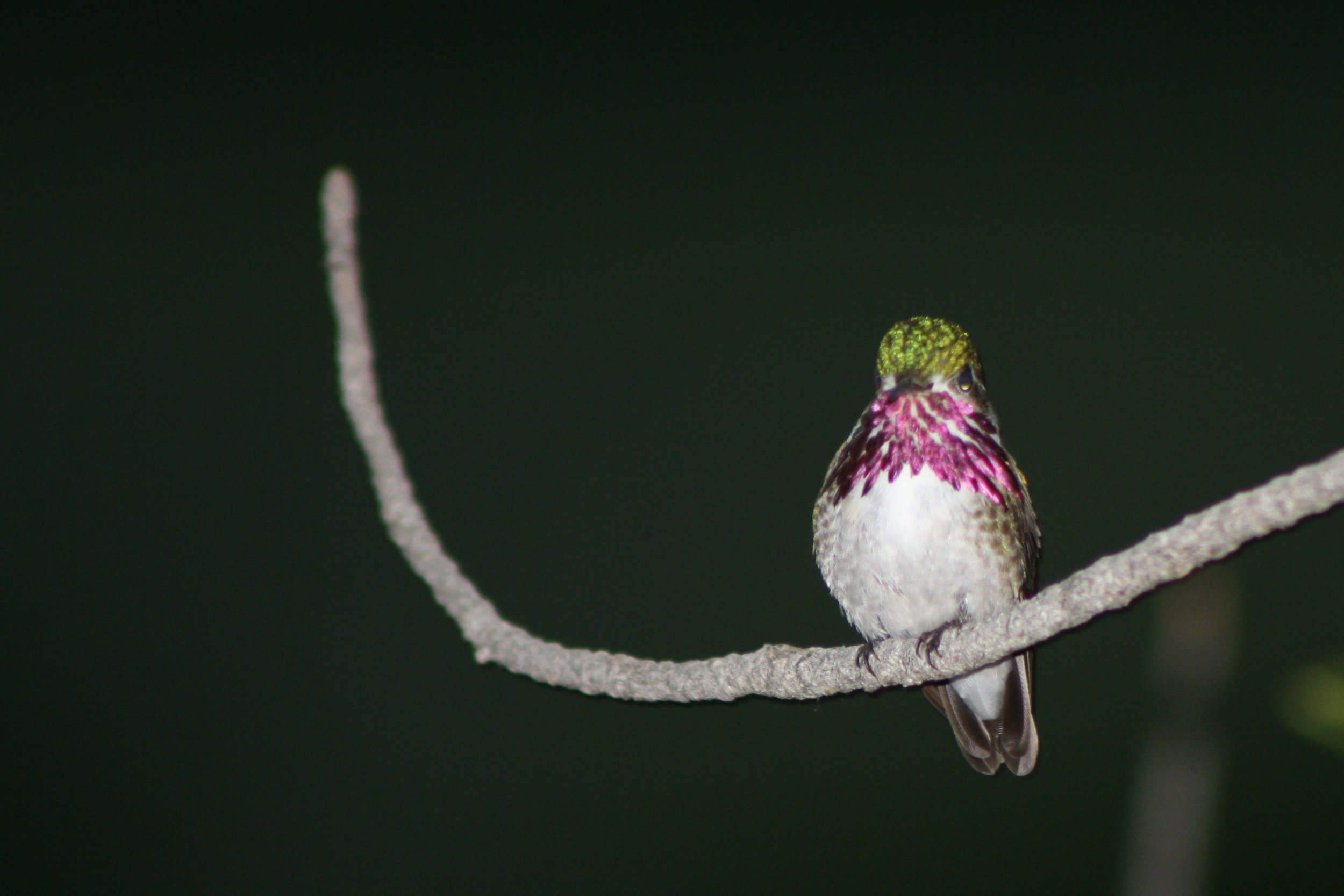
Male Calliope Hummingbird. Photo: Kati Fleming, CC BY-SA 3.0, via Wikimedia Commons

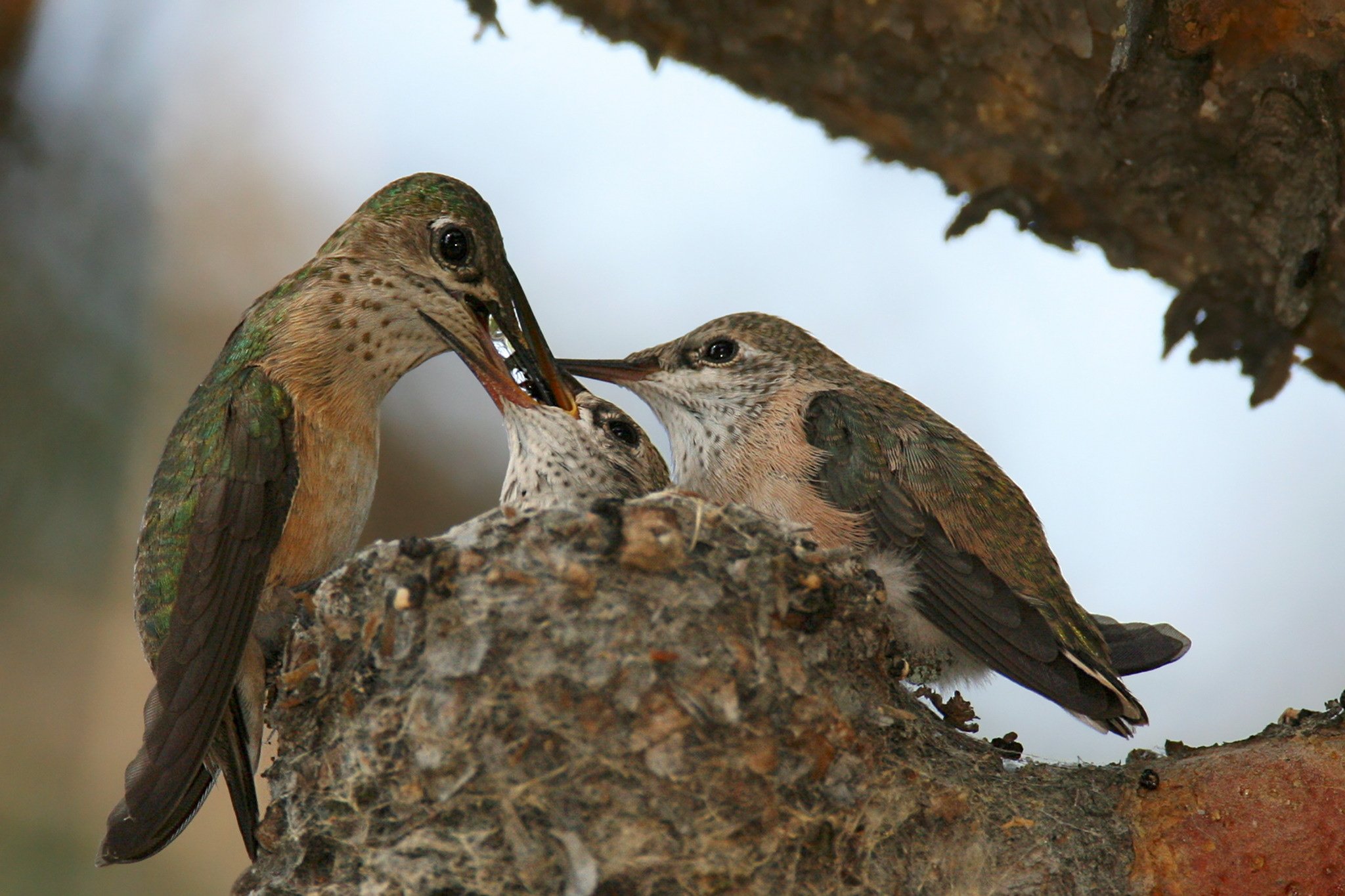
Female Calliope Hummingbird. Photo: Wolfgang Wander, CC BY-SA 3.0, via Wikimedia Commons

The smallest bird in the United States. Like the Rufous, it comes north along the Pacific in spring and returns south through the Rockies, which is why Colorado mostly sees it in July and August, in the foothills and mountains.
Male: magenta streaks fanning out over a white throat, like rays.
Female: a peachy wash underneath, a bronze-green back, a lightly speckled throat and a very short tail.
Size: 3.1 to 3.5 inches, 2.3 to 3.4 grams.
Status: on the Watch List.
How to tell them apart
Rose-magenta throat, loud metallic trill when he flies: male Broad-tailed.
Black-looking throat with a purple band at the bottom, perched on a bare twig: male Black-chinned.
Orange all over and picking fights: male Rufous.
Tiny, with magenta streaks on a white throat: male Calliope.
Green-and-buff female with a little rust at the tail base: female Broad-tailed. More rufous on the flanks and tail, and a bit bigger, points to a female Rufous.
Female with white tail tips and plain grayish underparts, at low elevation: female Black-chinned.
Very small female with a peachy wash and a stubby tail: female Calliope.
What I've seen on my porch
I watch the feeders from my porch in southern Denver. So far I've seen Broad-tailed and Rufous hummingbirds. I may have had a Calliope too, but I'm still learning to tell them apart, so I'm not counting it until I get a clear look or a good photo.
This year the first birds showed up in April.
My favorite part of the season is a little funny: every time I go out to clean the feeders, the birds scold me for it.
Sources
Cornell Lab of Ornithology, All About Birds: Broad-tailed, Black-chinned, Rufous, Calliope
USDA Forest Service: Hummingbirds of Colorado, Wyoming and South Dakota
Boulder County: Nature Detectives: Hummingbirds
University of Colorado Boulder: Broad-tailed hummingbirds need to return to Colorado sooner
Photo credits
Male Broad-tailed Hummingbird. Photo: Michelle Lynn Reynolds, CC BY-SA 3.0, via Wikimedia Commons
Female Broad-tailed Hummingbird. Photo: Bettina Arrigoni, CC BY 2.0, via Wikimedia Commons
Male Black-chinned Hummingbird. Photo: Vickie J Anderson, http://www.wildlifeimagesupclose.com, CC BY-SA 4.0, via Wikimedia Commons
Female Black-chinned Hummingbird. Photo: VJAnderson, CC BY-SA 4.0, via Wikimedia Commons
Male Rufous Hummingbird. Photo: VJAnderson, CC BY-SA 4.0, via Wikimedia Commons
Female Rufous Hummingbird. Photo: VJAnderson, CC BY-SA 4.0, via Wikimedia Commons
Male Calliope Hummingbird. Photo: Kati Fleming, CC BY-SA 3.0, via Wikimedia Commons
Female Calliope Hummingbird. Photo: Wolfgang Wander, CC BY-SA 3.0, via Wikimedia Commons